
From Seed to Harvest: Our Permaculture Garden
by Danilo Joksimovic
See every step: our full illustrated guide to the perma garden, with all 37 photos, in English and Serbian: zetsorchard.com/pm
It started with a simple question: why not try it ourselves? Permaculture works in California, France and Italy, so why not here, in our organic orchards? Plenty of people around us doubted it. Here is how one season went.
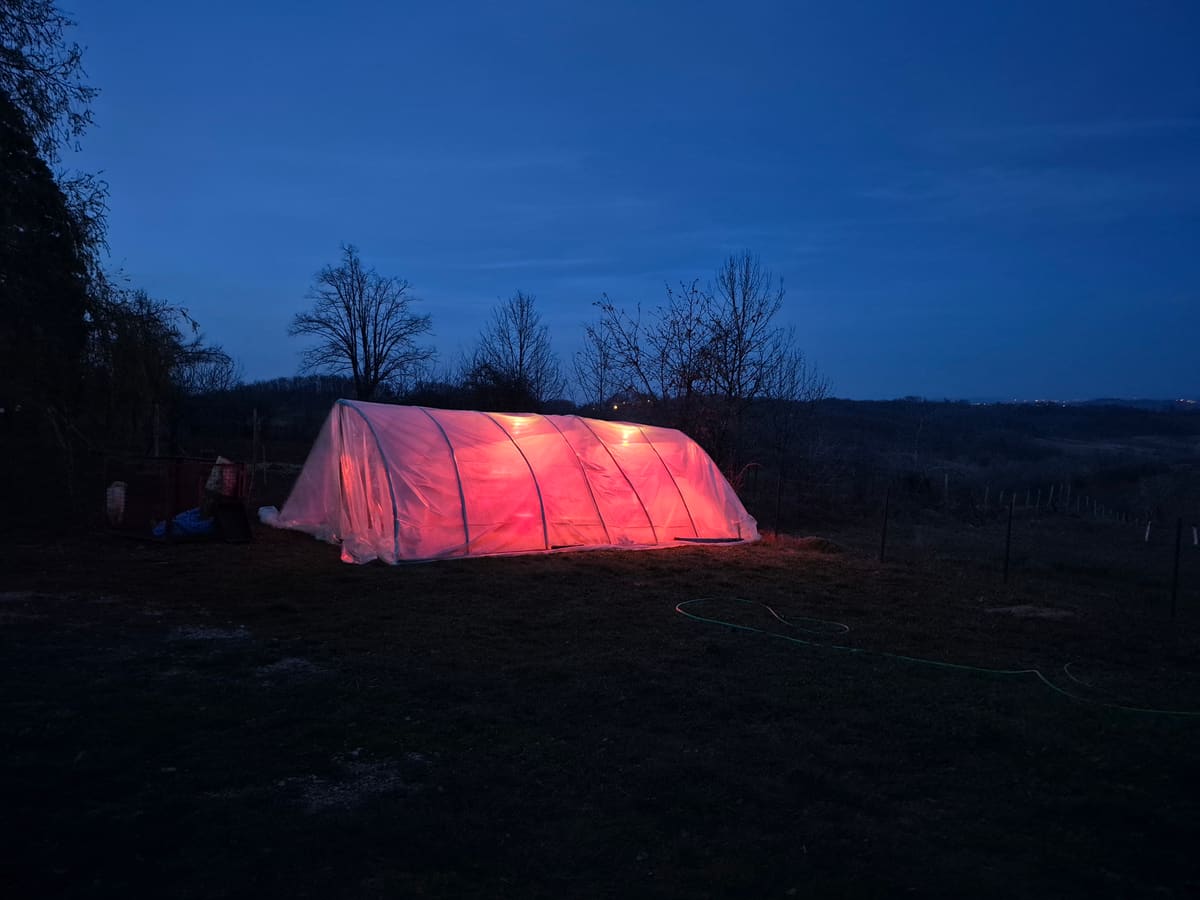
It starts in a small nursery
In February we sowed the first seeds in a plastic tunnel. On 20 March we built supports for the young plants from willow branches and old wooden slats, and on cold March nights we heated and lit the tunnel. Vegetables, herbs and flowers that start early give an early harvest. Onion, carrot and beetroot, our "three sisters", skip the nursery and go straight into the beds once it warms up.
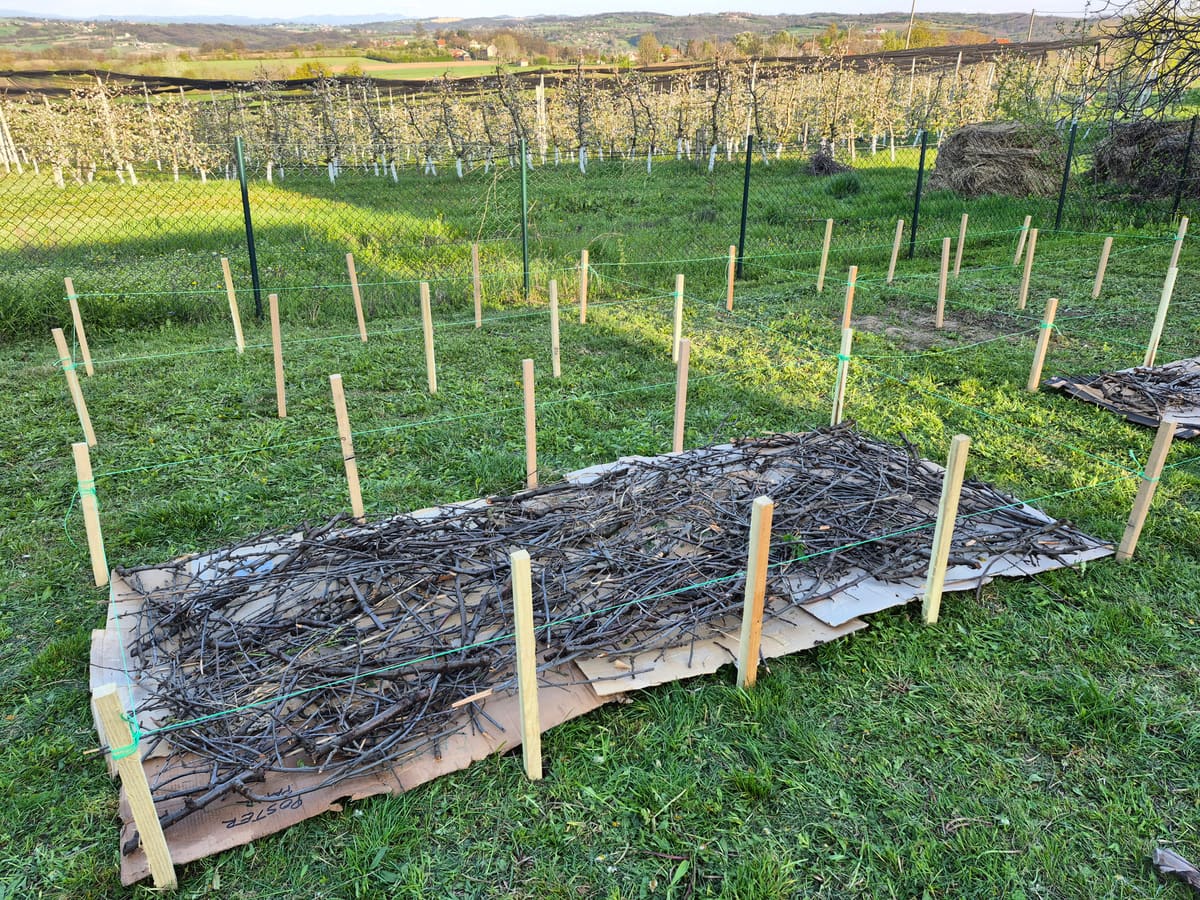
A bed built from what the orchard gives
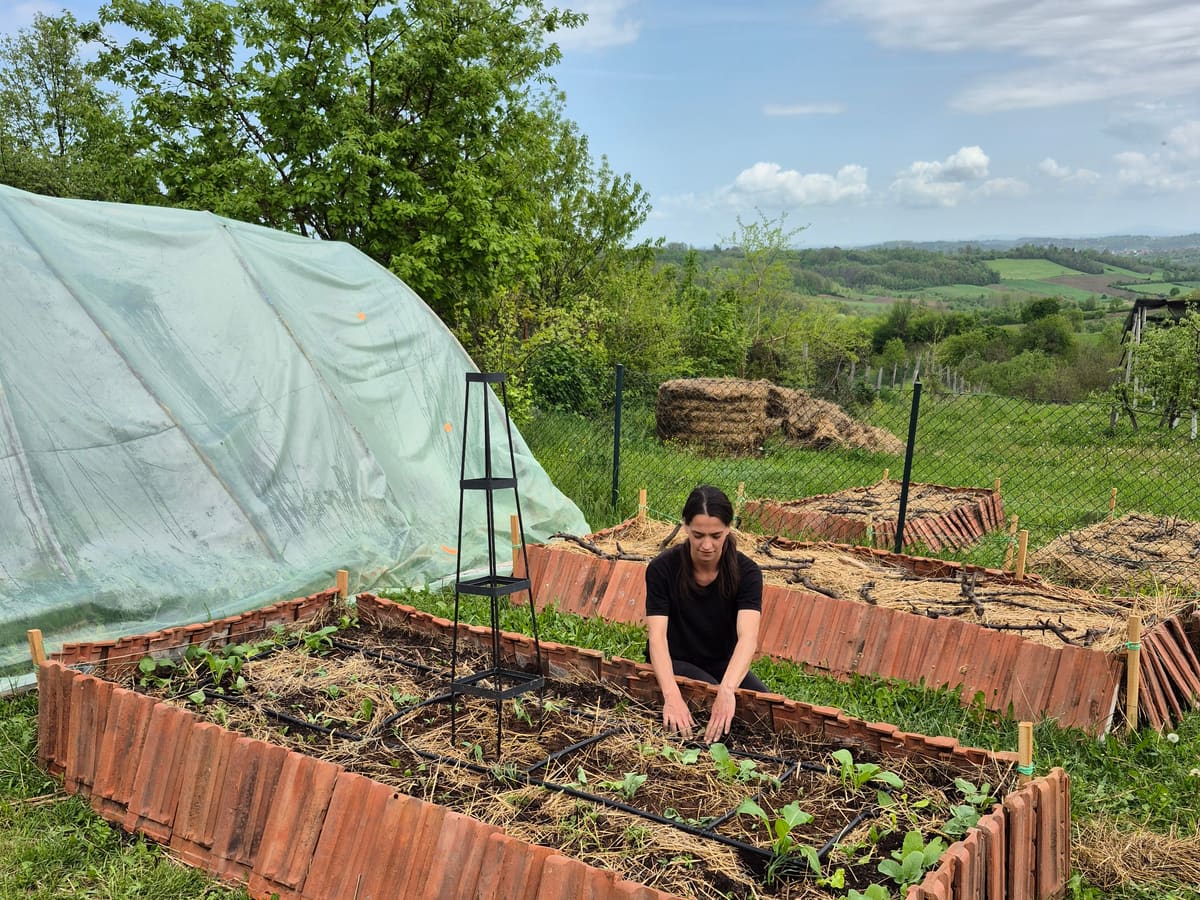
In early April we built our first perma beds, each about 1.2 × 2.4 m and half a metre high. No digging: we stacked seven layers, bottom to top.
- Cardboard boxes, cleaned of tape and labels
- Branches from last year's plum pruning
- Fresh grass cut in the orchard
- Straw
- Kitchen scraps and fruit not good enough for processing
- Farmyard manure
- More straw, watered with a natural activator of liquid, sugar and beer to start composting
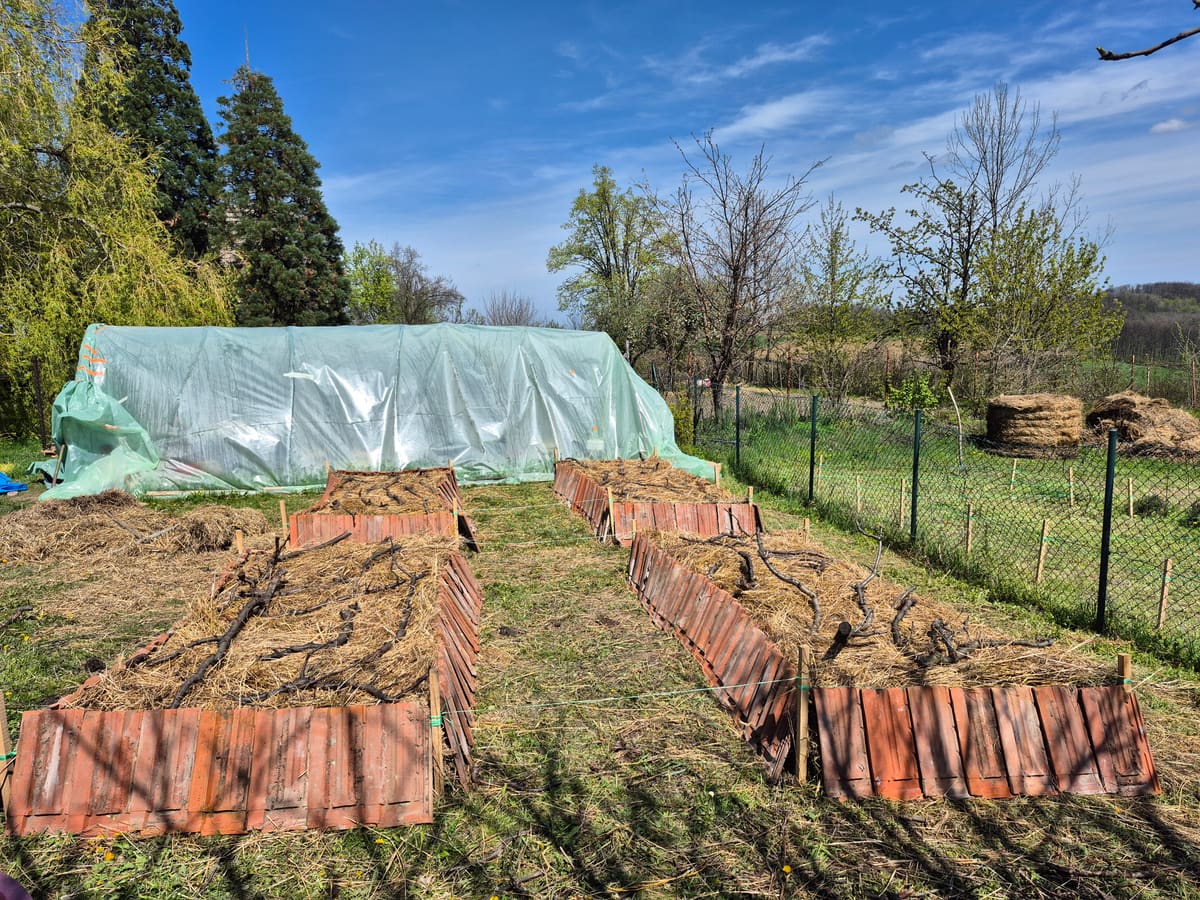
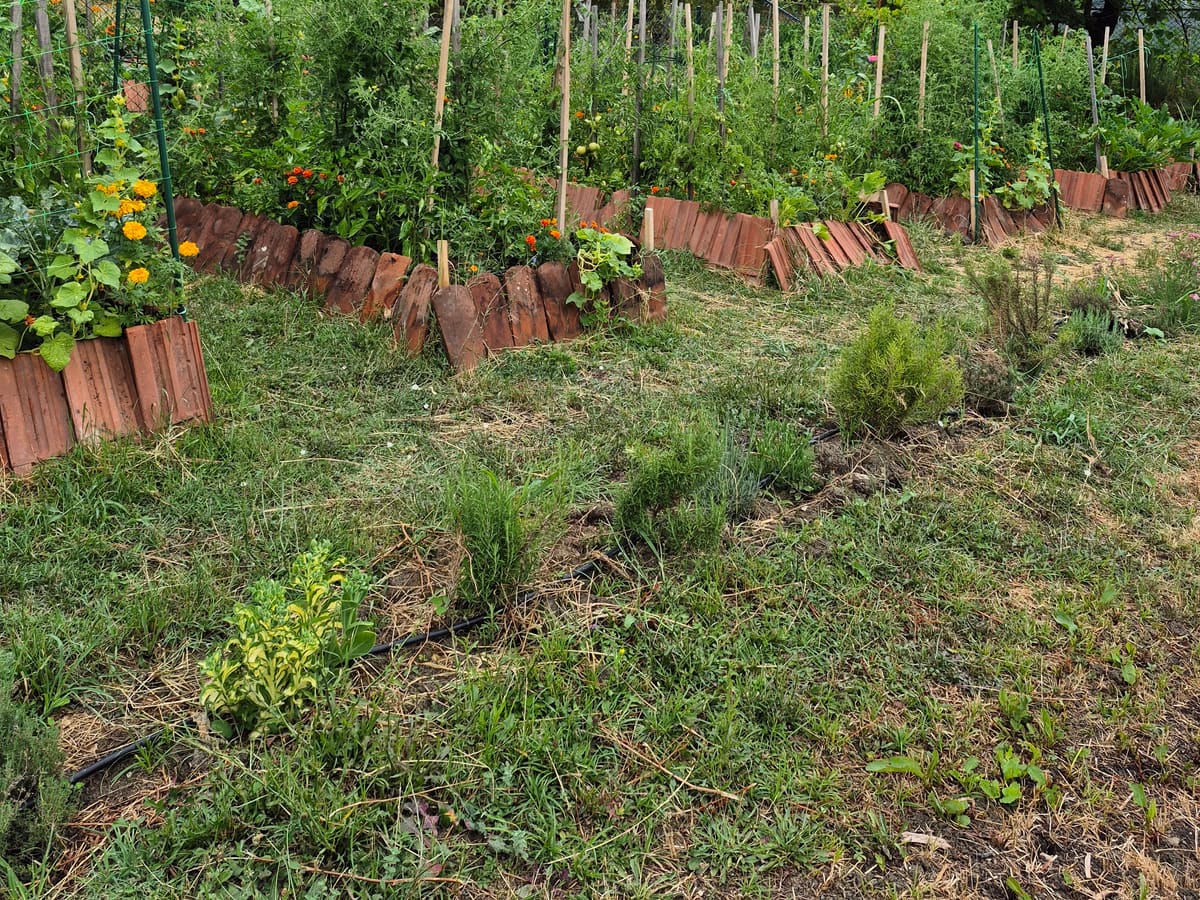
Branches on top keep the wind off the straw, and old roof tiles hold the edges. Nothing goes to waste: the orchard's own leftovers slowly become its soil.
Planting at the end of April
We waited for warmer days and planted cold-hardy crops first. Each bed got a top layer of humus soil, and every planting hole a 3 : 2 : 1 mix of humus soil, vermicompost and manure. Sneža and Nena planted densely, up to 200 plants of different crops in a single bed. After months of waiting, the garden came to life.
Flowers as a living shield
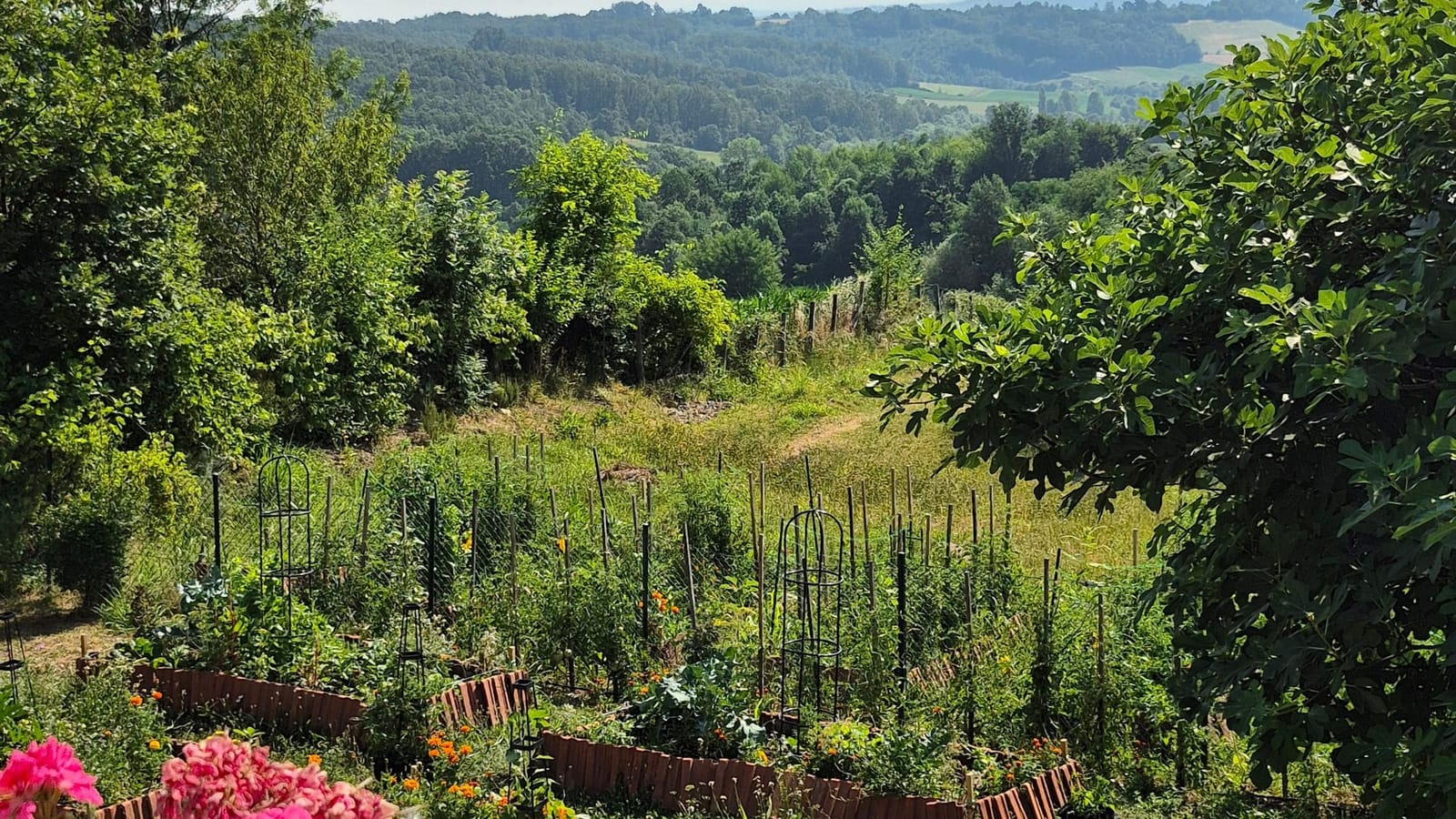
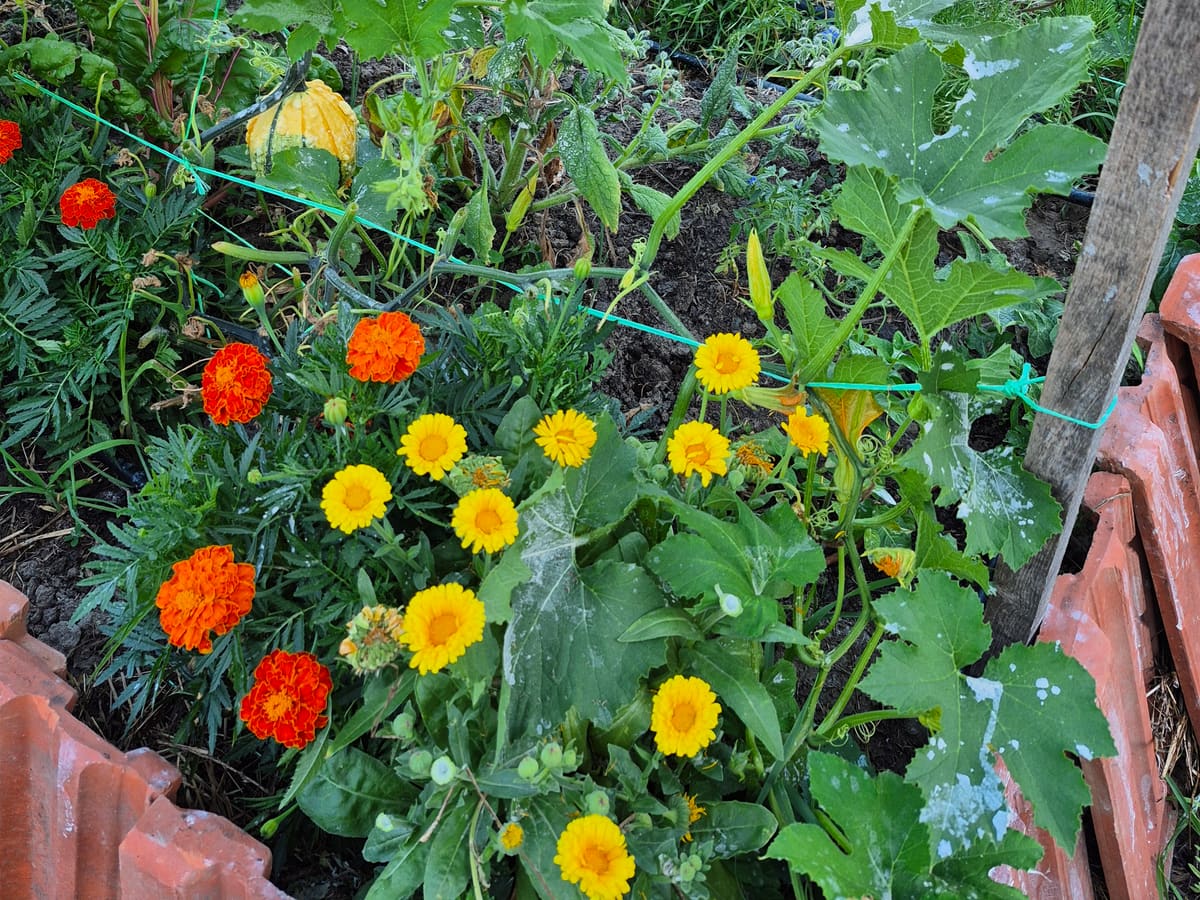
Marigold, calendula, borage, zinnia, sunflower, nasturtium, mint, chamomile, tarragon, basil, lavender and yarrow grow between the vegetables. They are not just for looks: they bring pollinators and beneficial insects, and the garden takes on the fight against pests so our fruit trees don't have to. Care stays light: whey and nettle feeds, neem, ash or kaolin only when needed, regular watering and a thorough check once a week.
The first harvest
At the end of June, about five months after the first seed, we picked our first vegetables, earlier than most gardens in our area. By July the beds gave lettuce, chard, radishes, basil, courgettes, beetroot, carrots and more than ten kinds of tomatoes. Dense planting kept the soil moist and the weeds out, and the odd plant eaten by pests acted as a decoy that spared the rest.
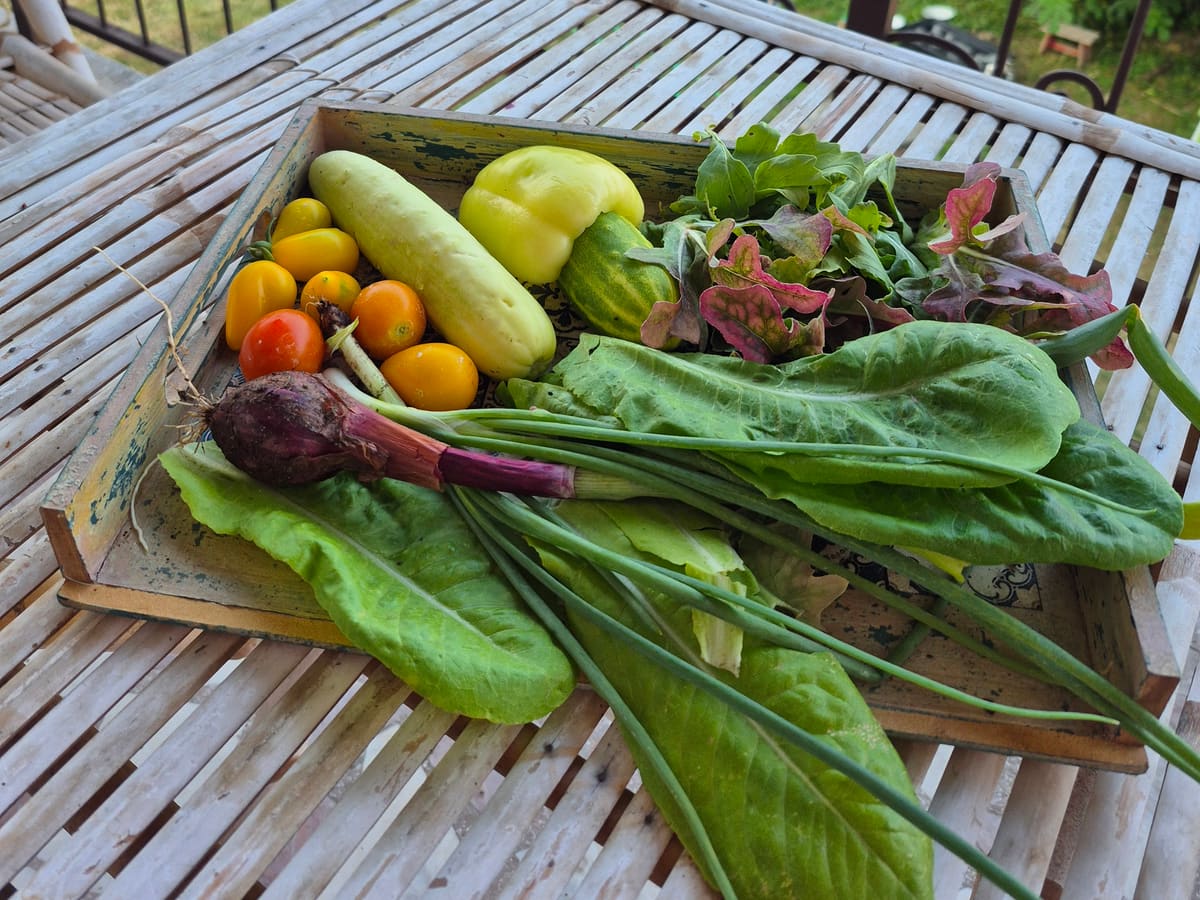
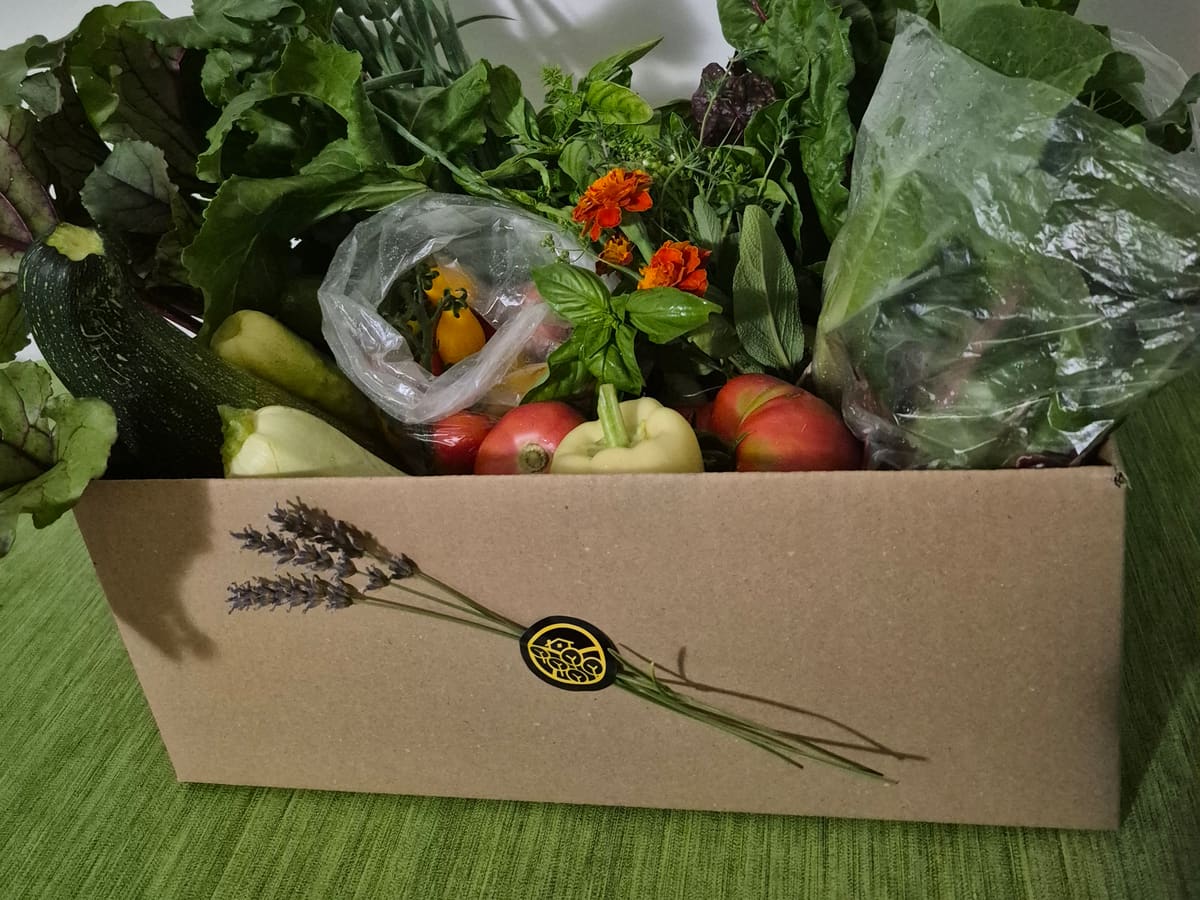
Soon people started asking for our vegetables. Each box holds whatever is ripe that week. As we say: Kutija iz ZETS bašte – kao iz mašte (a box from the ZETS garden, like something from a dream).
The circle continues
Our Mediterranean herb bed guards the summer vegetables and draws insects that also help the orchard. In autumn we dry its herbs for ZETS spices. As summer ends, cabbage-family crops, greens and herbs take over some beds. October and November bring the last harvests, December and January are for rest and planning, and in February it all starts again.
Try it at home
You don't need an orchard. A balcony, a small yard or a community garden is enough to grow vegetables, herbs and edible flowers. A little space, a little effort and a lot of nature.
Coming to visit? Walk through the whole season step by step at zetsorchard.com/pm.